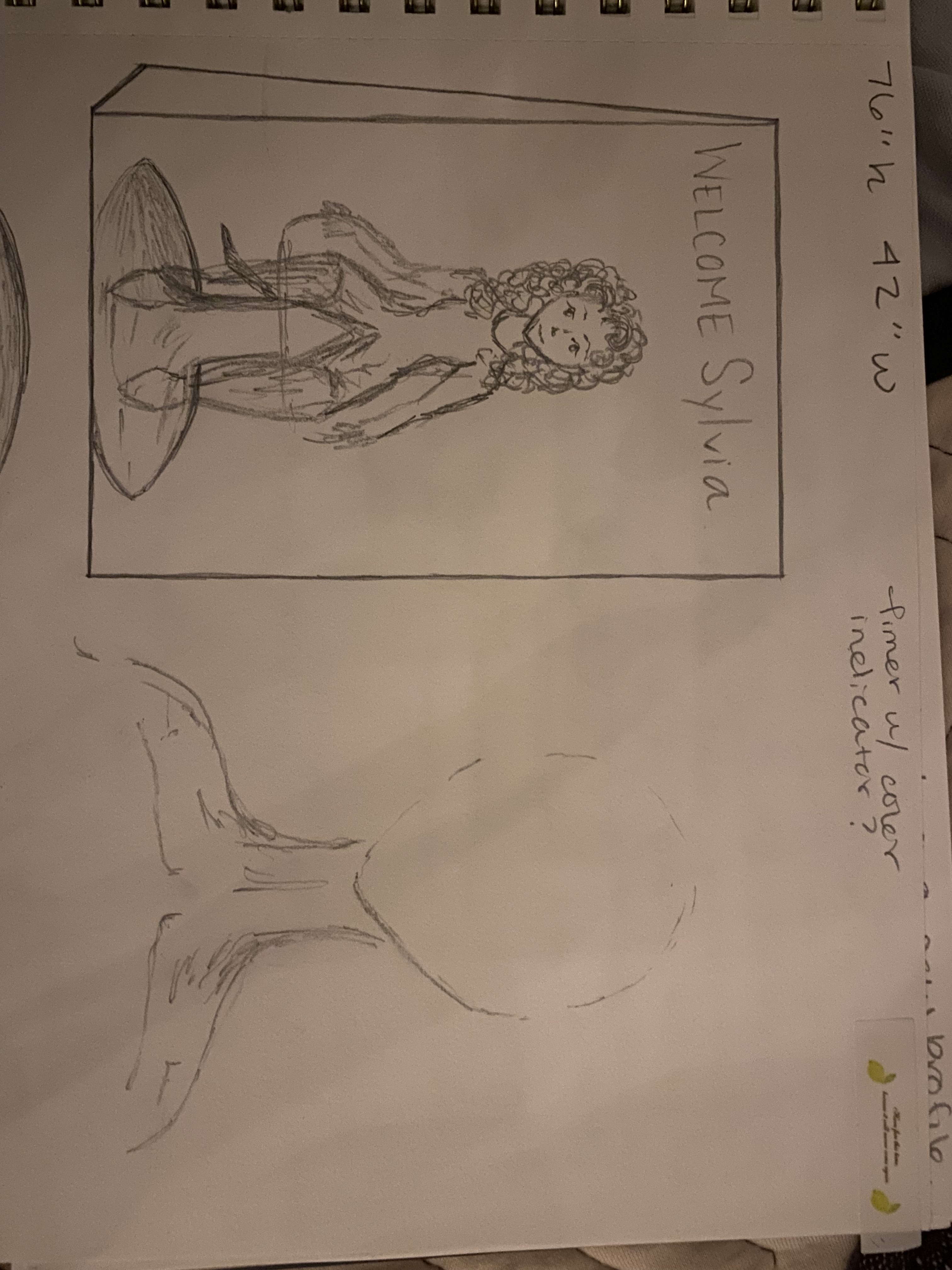
The Looking Glass bridges this communication gap by providing a visual interface where stylist and client may collaborate on their vision in real time. Using an interface connected to a smart mirror, the Looking Glass allows the client to see potential cut and color options before making a commitment.
Using facial recognition software, the mirror pinpoints the clients movements to create an accurate hair style visual through their reflection. Vast customization options allow the hairdresser to explore any cut, style, and color with finding products geared specifically to the clients hair type.
Communicating with a hairdresser is a fun and exciting time but the flutters of joy can quickly disappear if the end result is not what the client imagined. This can be disappointing for both the stylist as well as the patron if they are to leave unhappy and it is especially pertinent, considering hairdressers rely heavily on customer satisfaction to stay employed.
A fully immersive and personable salon experience rooted in VR to achieve the client’s perfect look. Utilizing a tablet based software that connects to a smart mirror, the stylist can program a virtual reflection of their customers desired cut/ color in real time. This cuts out the confusion and allows the client to explore a variety of styles until they find the perfect one.
I knew I needed an easy way for the client to input their wishes while the design process was happening, yet efficient enough for the stylist to come up with the collaboration on the spot. Therefore, a desktop or tablet application connected to a smart mirror through bluetooth, to display the hair-style using virtual reality in real time, seemed like the perfect solution.
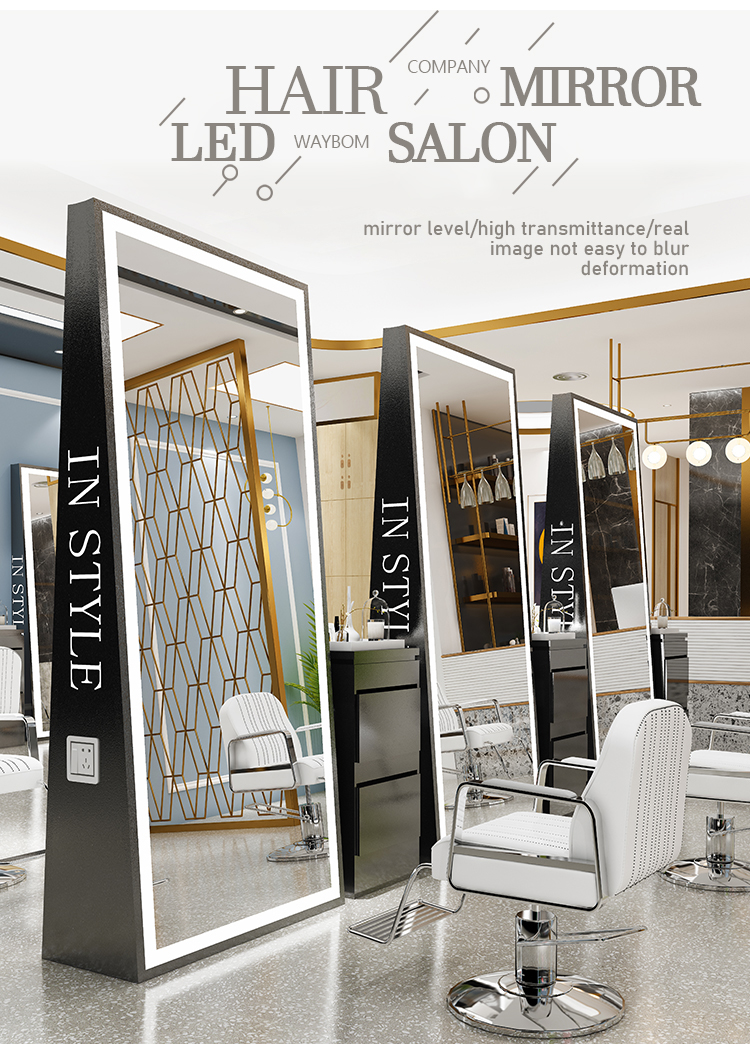

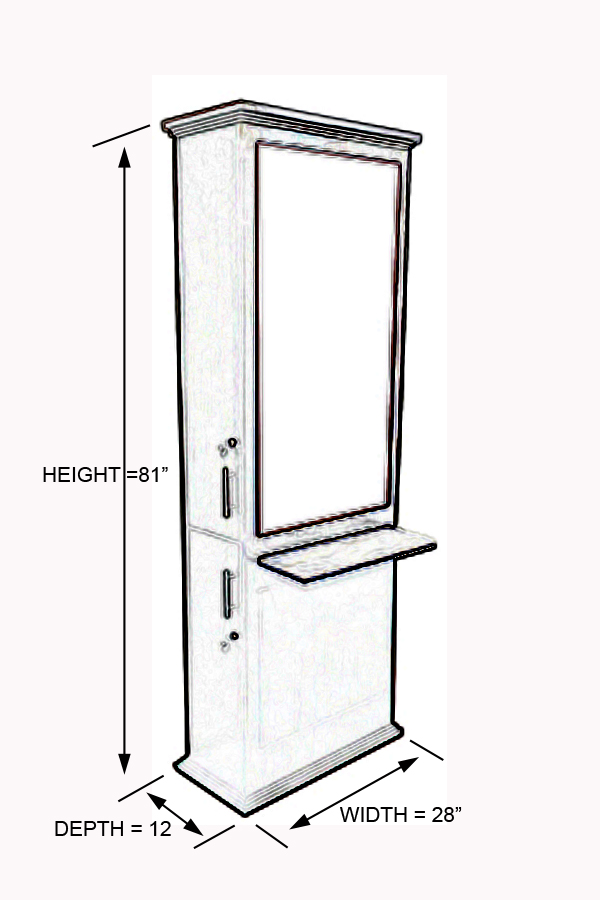
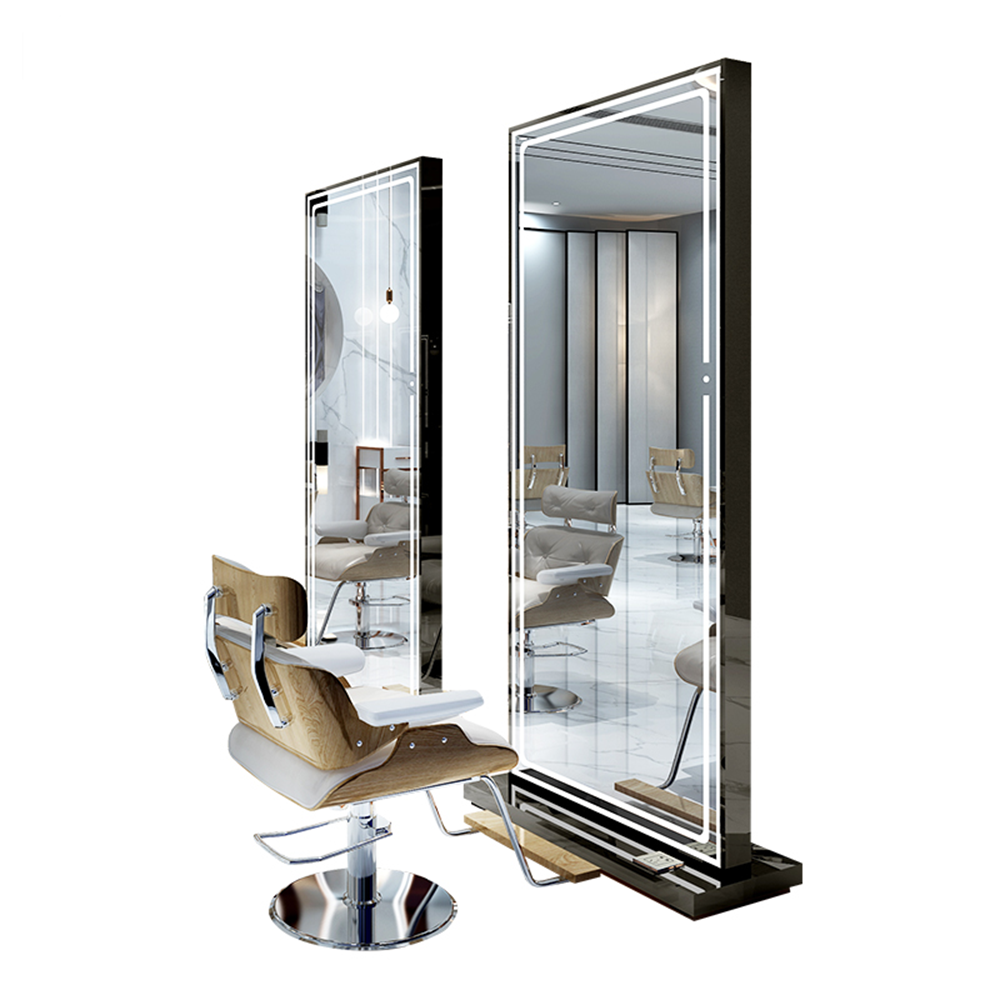
Two Way Mirror - $150.00
Acrylic Two Way Mirror - $457.33
Raspberry PI - $120.00
LED Lights- $30.00
Labor- $30.00/ 2hr - $60.00
Approximate Total: $667.33
Profit Total: $700.00 - $1000.00/ mirror
Thinking through the details for this application was extensive. Fundamentally, the challenge was designing the application in a way that requires very little input from the stylist. To innumerate, they are able to skim through a variety of options rather quickly as the goal is for the stylist to spend as little time on the app, as possible, nailing down that perfect look.
The application itself uses algorithms based on specified data to ‘match’ the client up with potential styles based on face-shape, age, and hair specifications. Essentially, a camera is built into the mirror that scans the client’s face to determine its shape. The information is then run through a database to compare hair and ultimately, yield styles that highlight the clients best features.
OVAL: Usually the length of your face is more than the width, with the forehead being the widest part of the face. Papanikolas says this shape is usually considered the most desirable face shape.
SQUARE: The length to width is nearly one to one, equal lengths horizontally and vertically, with a strong angled jaw, and minimal curve at the chin.
ROUND: The length and width ratio is about equal. Soft and rounded features, with flatter cheekbones, and the cheeks stand out as the widest part of the face. Similar to a square face shape with softer angles.
HEART: Pointed Chin with a wider forehead and slimmer chin, usually in the shape of an inverted triangle
OBLONG/ RECTANGLE: When the width of the forehead, cheeks, and jawline are nearly the same, or the distance from forehead to chin is a bit longer than distance ear to ear.
DIAMOND: Usually defined by high cheekbones, a pointy chin, and a narrower forehead.


Oval face shapes can wear almost any style, but according to Papanikolas, the most flattering tend to be: long layers, shoulder-length waves, full fringe, layered bob or a side-swept pixie. Pollack is partial to a strong square bob which brings focus to your sharp jawline.
Square face shapes may consider softening the edges around the forehead and strong jawlines, so wavy shags with wispy fringe, soft side-swept bangs, or long layers with fringe work best. If you want something shorter than an asymmetrical fringe, create softer angles, Papanikolas says.
Round face shapes works well with a long bob, Pollack says, which draws the eyes down to visually lengthen the face. Papanikolas echos this, saying round faces do well with cuts that elongate the face, like long straight hair, long voluminous waves, shaggy bobs, and swoopy bangs with cropped sides.
Heart shapes look best with blunt bangs and wavy layers or a chin-length bob with bangs. Soft angles in the front that start below the face help balance out the longer forehead, Pollack says. The key here, according to Papanikolas, is to keep the bangs narrow so that you can create the illusion of less width at the top.
Oblong/Rectangle face shapes take a similar approach to square faces. Soften edges and strong jawlines with layers, volume, and side-swept or feathered fringe. Long layers and angles add movement and texture to the hair.
Diamond shapes can show off their high cheekbones with short-cropped hair, or keep it long with face-framing layers. Added bangs that hit around the cheekbone also accentuate this shape.
To personalize the experience, the desktop/ tablet application allows for versatility. By incorporating ready to use filters, the stylist is able to mock up the closest visual representation.










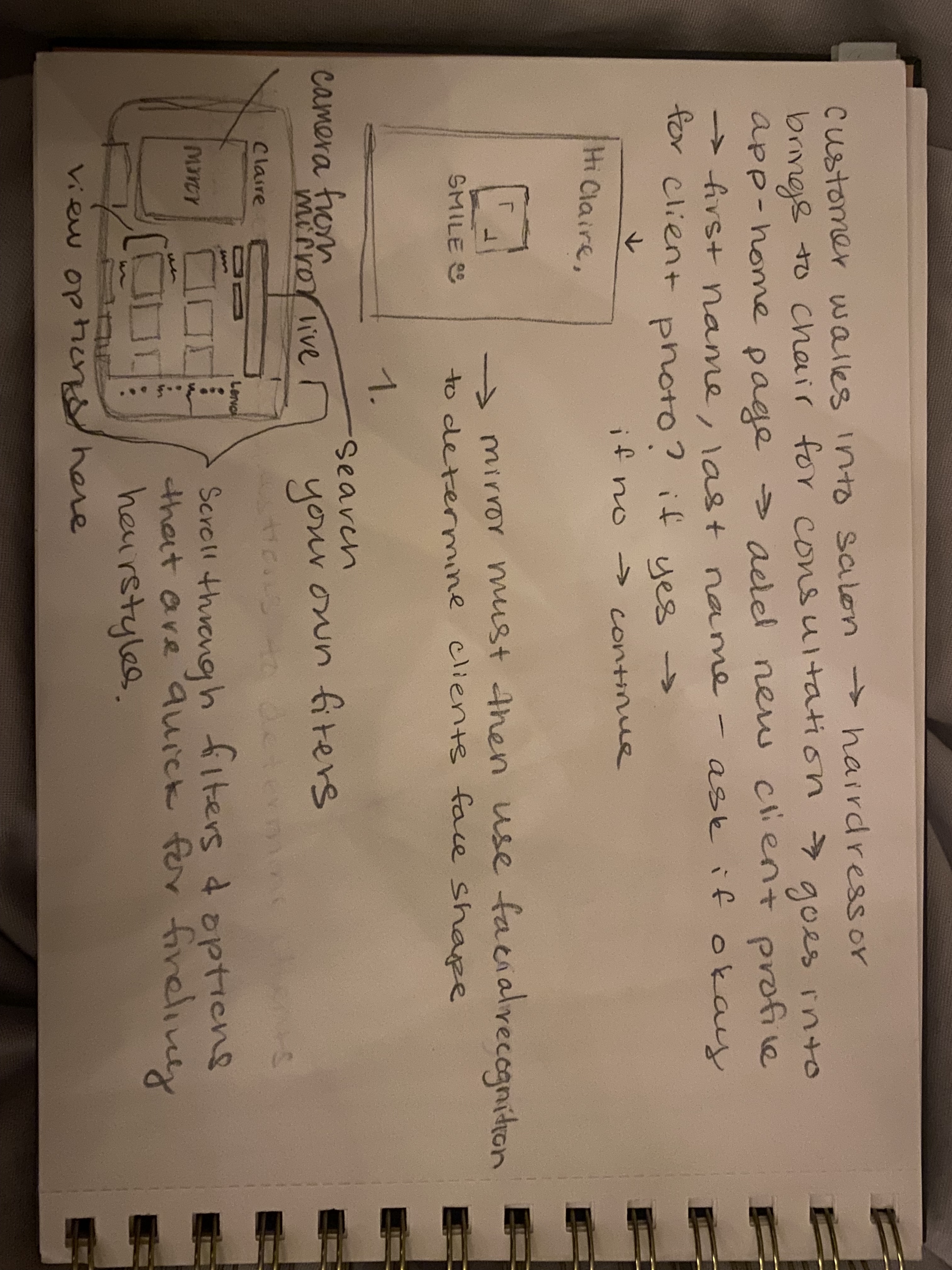
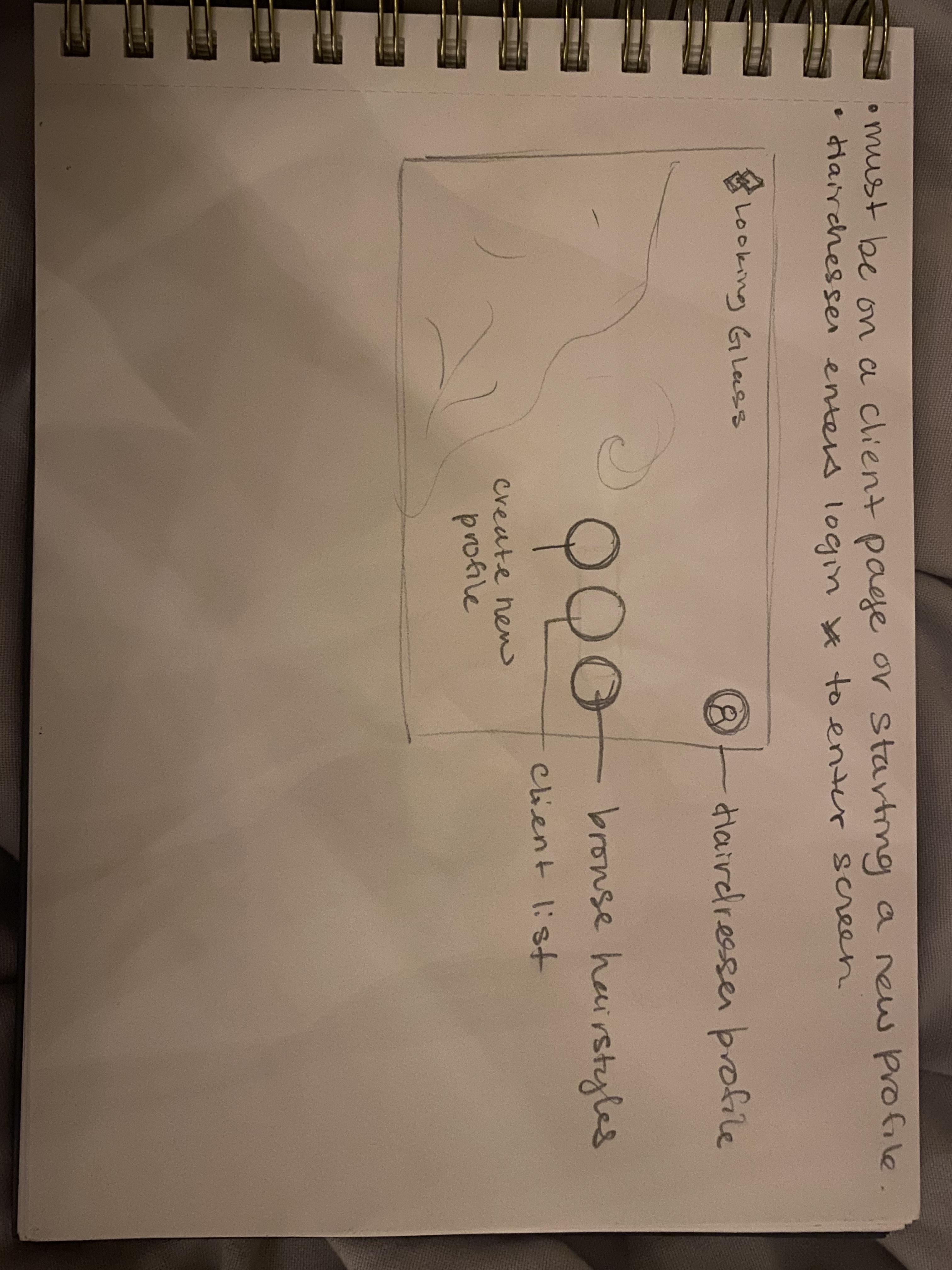
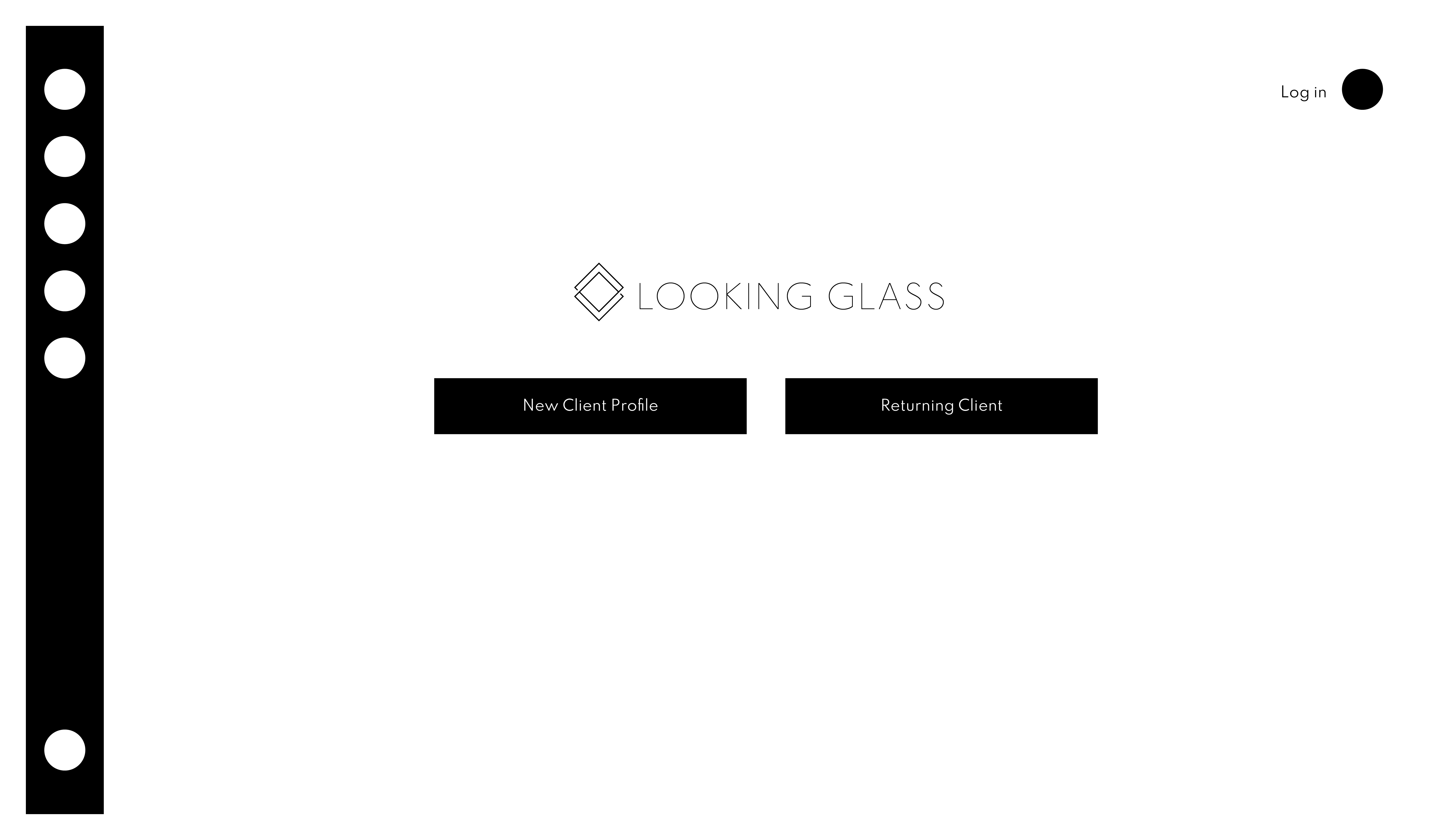


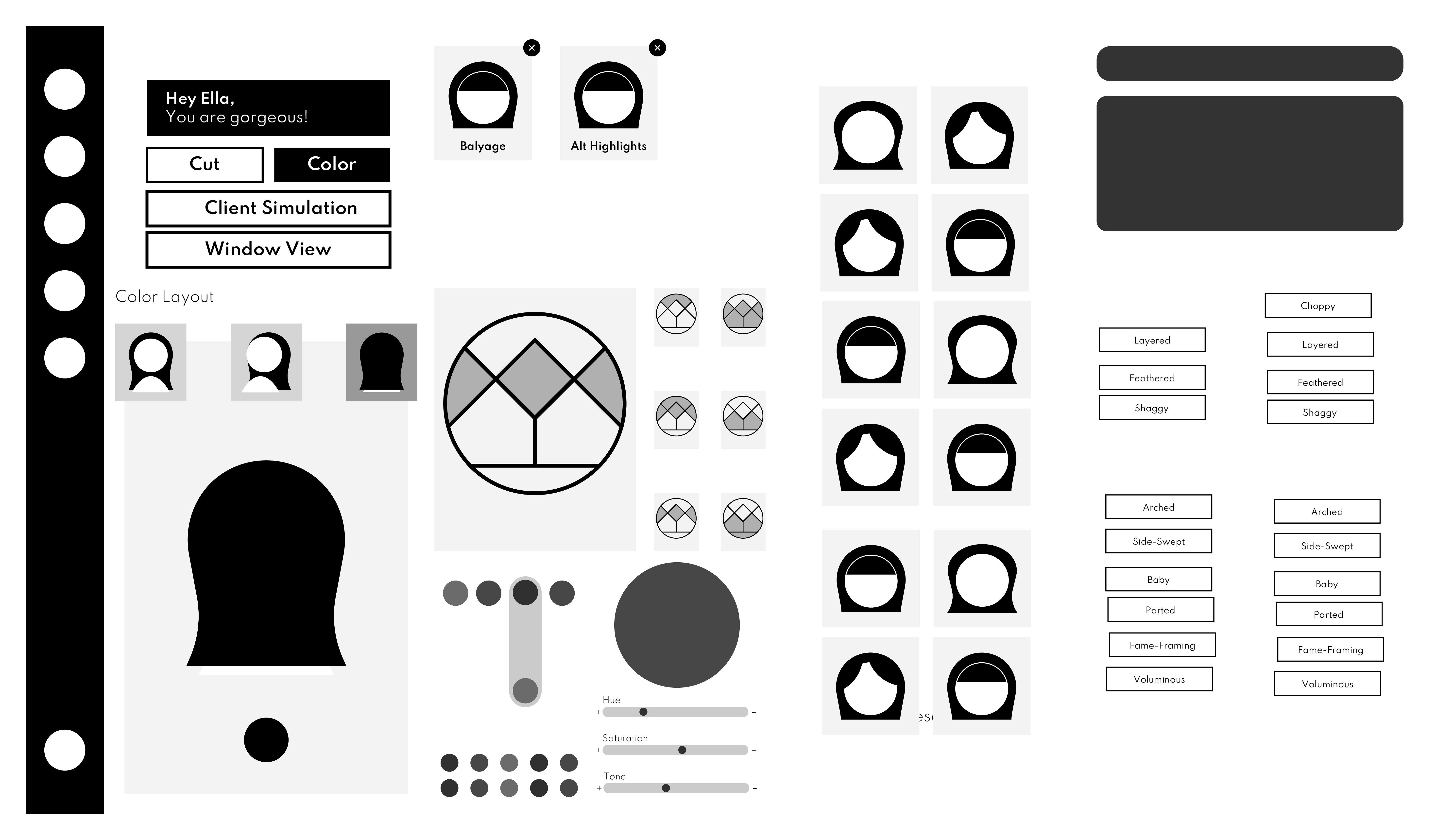

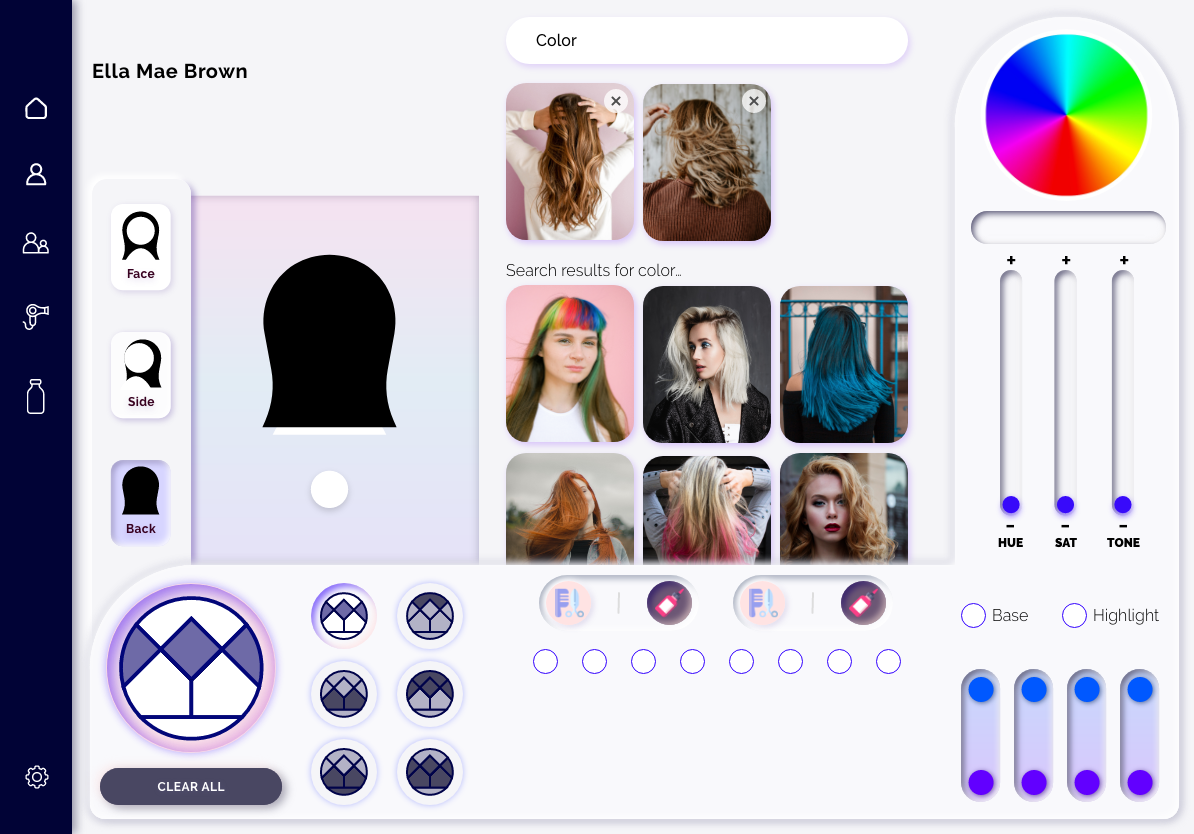
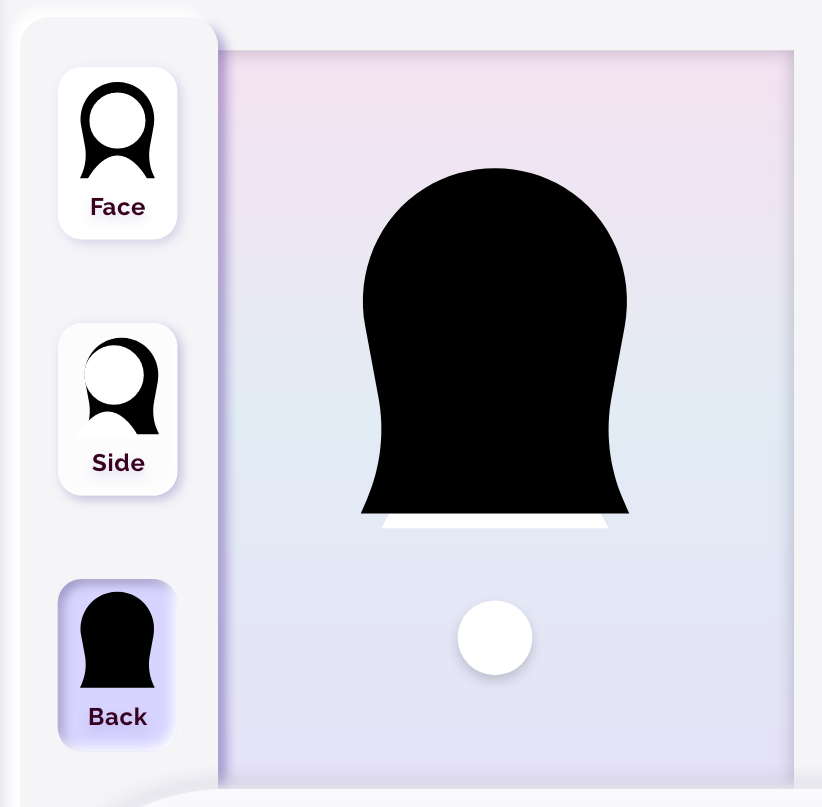
The Mirror section is essentially the stylists' canvas. It is where a mirror image of the client is displayed. On the left side, the stylist may choose which view they want to work on. Additionally, they can choose whether or not to show their client what they are mocking up by toggling a small screen view on the smart mirror.
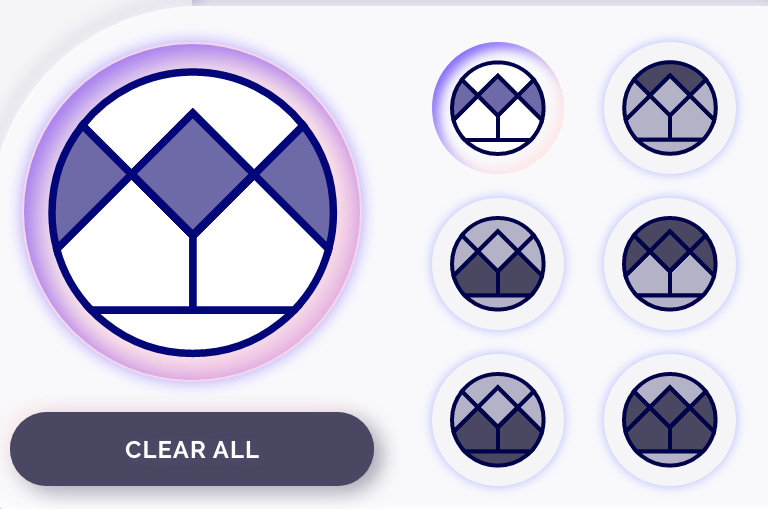
Below the mirror section is where the stylist may choose what section of hair to virtually cut, color, or style. There are 7 main parts where the hair is sectioned. By having this feature, the stylist has more freedom when creating new looks.
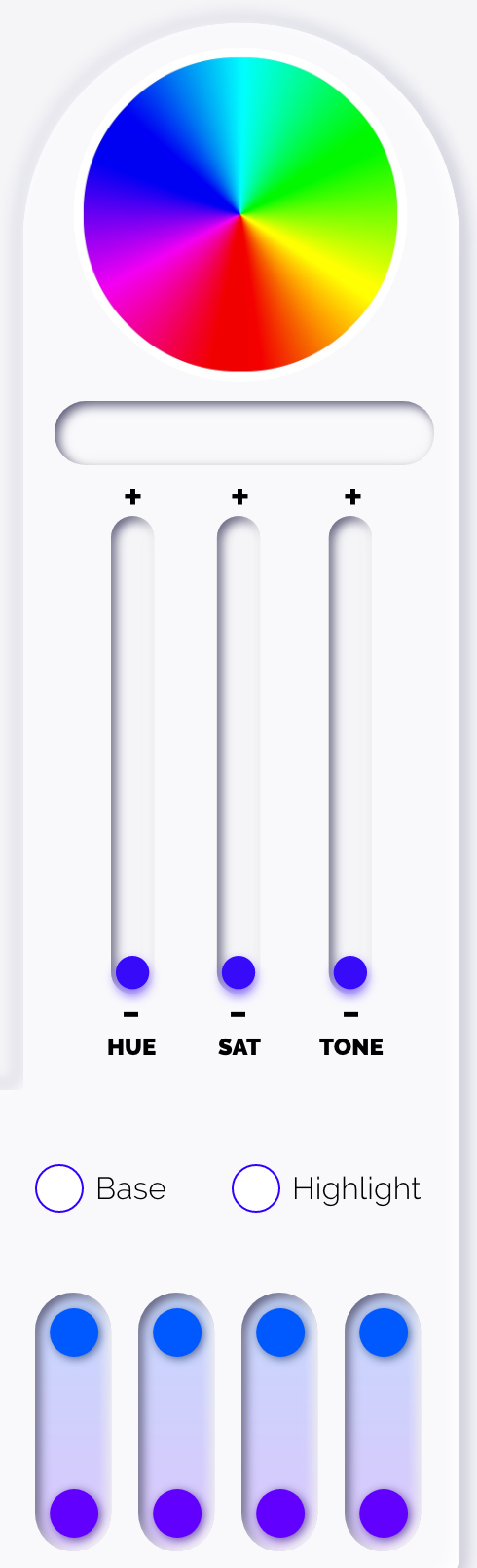
Using the color panel the stylist is able to find the perfect shade to add to any design. Add up to 8 colors to a section of hair. The 8 colors include gradating from one color to another.
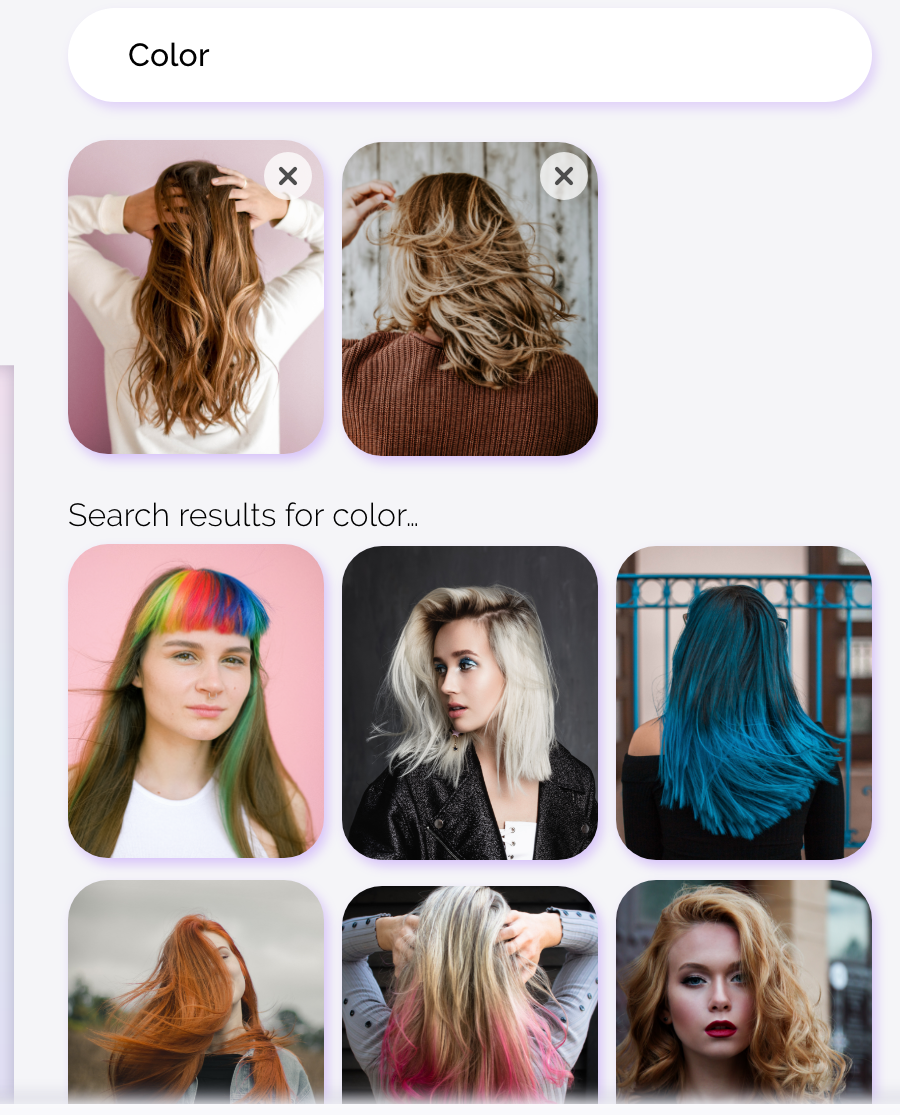
The stylist may search for any type of hair style for both cut and color and then use it as a template to begin their work. For example, if a client wanted a balayage, it is very simple for the stylist to search the preferred filter for the client to have a visual idea.
The Looking Glass dashboard is an efficient way for stylists to work while giving themselves and their clients peace of mind. Using virtual reality to try on new cuts, color, and styles is not only a fun experience but could also push clients to try things they may not normally try!
Who knows, in the technologically advanced future, mirrors and virtual reality sounds like a pretty solid direction to me.